
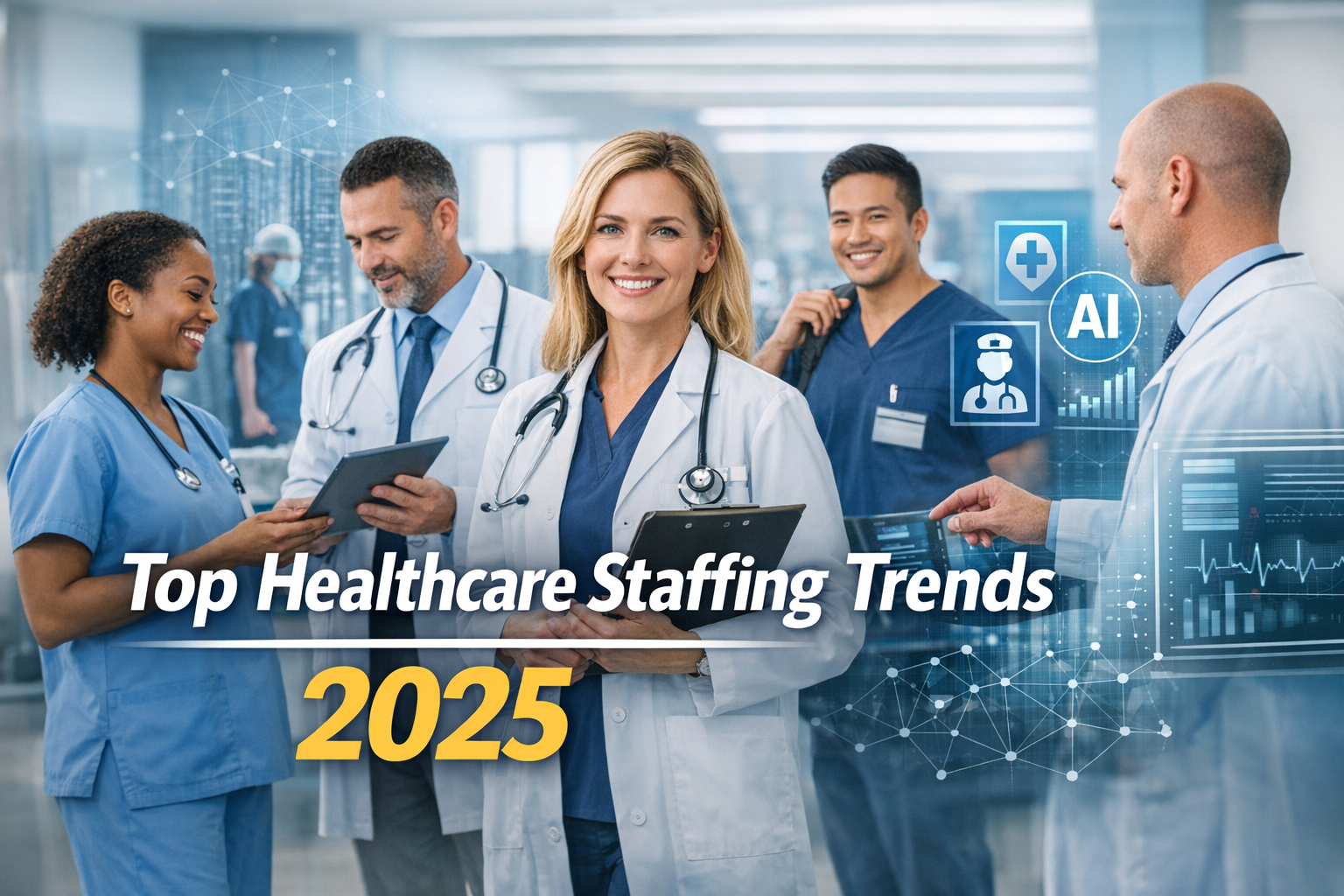
Top Healthcare Staffing Trends to Watch in 2025
/
What Every Healthcare Facility Should Know to Stay Ahead
Healthcare staffing isn’t just about filling open shifts anymore. It’s evolving rapidly as workforce expectations, technology, and patient demand reshape how care gets delivered. Here’s a breakdown of the key trends transforming staffing strategies in 2025.
1. Flexible, On‑Demand Staffing Is Becoming the New Normal
Healthcare facilities are moving beyond traditional full‑time hiring. Instead, on‑demand and shift staffing platforms are gaining traction, letting facilities post open shifts in real time and clinicians claim them instantly. This flexibility helps manage unpredictable patient volumes and reduces administrative burden.
Why it matters:
Faster coverage for last‑minute gaps
Less overtime burnout for full‑time staff
Better work‑life balance for clinicians
2. Travel, Per Diem & Locum Tenens Roles Stay in High Demand
Although the explosive growth of travel nursing during the pandemic has moderated, these roles remain essential, especially in specialties like ICU, emergency care, and psychiatry. Locum tenens physicians are also increasingly used to cover shortages, offering facilities vital flexibility without long‑term commitment.
Trend highlights:
Travel nurse staffing still accounts for a large slice of temporary healthcare labor spend.
Locum tenens roles are increasingly seen as career pathways in their own right.
3. Technology & AI Are Redefining Staffing Operations
Technology isn’t just a scheduling tool anymore, it’s a strategic workforce asset. Healthcare organizations are adopting AI‑powered recruitment, predictive scheduling, and automated credentialing to streamline hiring and reduce administrative load.
What this looks like in practice:
AI forecasts staffing needs before shortages hit
Automated systems speed up credential checks
Smart scheduling balances workload and reduces burnout
4. Talent Shortages & Retention Challenges Persist
Staff shortages remain a defining trend in 2025. Many facilities continue to rely on external staffing to meet minimum safe levels, and projected deficits in nurses and practitioners are driving creative solutions.
Facility implications:
Growing dependence on contingent labor
Need for stronger retention strategies
Ongoing competition for skilled clinicians
5. Work‑Life Balance & Wellbeing Are Staffing Priorities
Clinicians increasingly value flexibility, autonomy, and wellness programs, especially after years of burnout in the field. Staffing models that support work‑life balance and clinician wellbeing are becoming central to retention efforts.
Examples of forward‑thinking practices:
Offering per diem and flexible scheduling
Expanding mental health support
Prioritizing time‑off and controlled workloads
6. Internal Workforce Models Are Emerging
Rather than relying solely on external agencies, many hospital systems are building internal float pools of part‑time and per diem clinicians. This helps reduce costs associated with agency labor while maintaining staffing flexibility.
Benefits include:
Better continuity of care
Lower dependency on high‑cost travelers
More predictable workforce planning
🏁 The Bottom Line for 2025
Healthcare staffing in 2025 is all about adaptability. Facilities that embrace flexible work models, invest in smart technology, and rethink traditional hiring will be best positioned to navigate workforce shortages, support clinician wellbeing, and deliver quality patient care.


