

The Growing OBGYN Shortage: What It Means for Healthcare and How Strategic Staffing Can Help
/For many healthcare organizations, finding enough OBGYN providers to meet patient demand is becoming increasingly difficult. But behind every open position or uncovered shift is a much bigger story.
There are patients waiting for appointments. Expectant mothers who need reliable access to prenatal care. Labor and delivery departments that need experienced providers available around the clock. And existing physicians who may be taking on additional shifts, call responsibilities, and workloads to keep everything running.
Today's OBGYN workforce challenges aren't simply a staffing issue, they're an access-to-care issue. And as shortages continue to affect communities across the country, healthcare organizations are being challenged to think differently about how they maintain reliable women's health and obstetric services.
The OBGYN Shortage Is a Growing Concern
The demand for OBGYN care isn't going away, but the number of physicians available to provide that care isn't keeping pace in many communities.
The American College of Obstetricians and Gynecologists (ACOG) has highlighted several challenges facing the OBGYN workforce, including physician burnout, an aging workforce, and limitations on the number of available residency training positions. ACOG cites federal projections of a shortage of 5,000 OBGYNs by 2030 and notes that physician retirements are outpacing replacements.
These challenges become even more concerning when we look at where care is available.
More than 35% of U.S. counties are considered maternity care deserts, meaning they lack a hospital or birth center offering obstetric care and do not have obstetric providers. For patients living in these communities, accessing routine maternity care can mean traveling significant distances and accessing care during an emergency can become even more challenging.
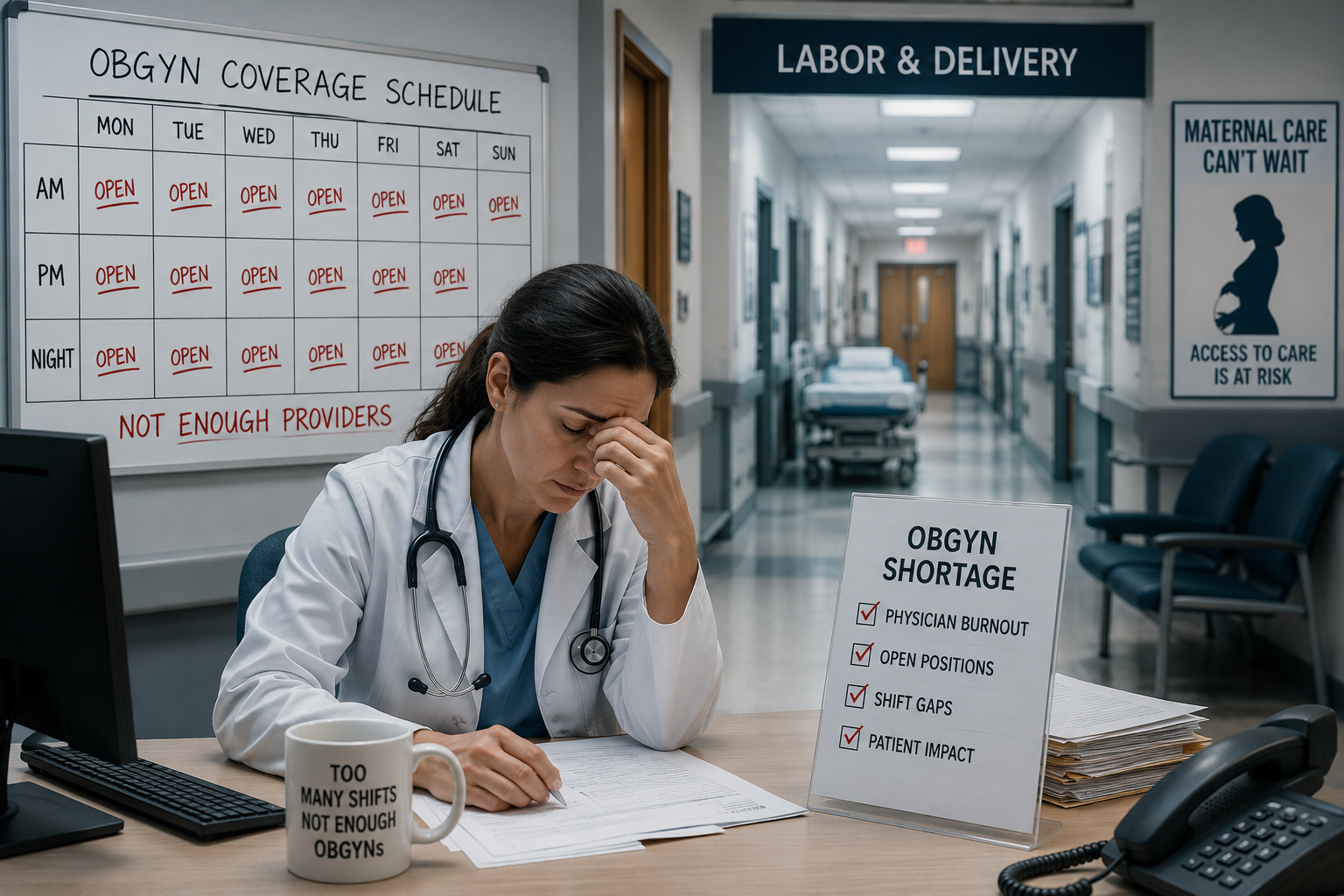
When an OBGYN Position Goes Unfilled, the Impact Is Felt Across the Organization
An open OBGYN position isn't just an empty spot on the schedule.
When coverage is limited, the physicians who remain may be asked to take additional call, cover more shifts, or manage larger patient volumes. Over time, that added responsibility can contribute to fatigue and burnout, potentially making an already difficult workforce situation even harder.
The effects can also reach patients.
Limited provider availability may contribute to longer appointment wait times, reduced scheduling options, and challenges maintaining consistent access to prenatal, gynecologic, labor and delivery, and postpartum care.
For hospitals and health systems, persistent coverage gaps can also create difficult operational decisions. Maintaining reliable labor and delivery coverage requires the right clinical resources to be available when patients need them and babies don't exactly follow a staffing schedule.
Rural and Underserved Communities Face an Even Greater Challenge
While OBGYN workforce challenges can affect healthcare organizations anywhere, rural communities often experience the greatest strain.
When a community loses access to local obstetric services, patients may need to travel farther for prenatal appointments and delivery. That distance becomes even more significant when complications arise or urgent care is needed.
The challenge goes beyond convenience. Access to consistent maternal healthcare plays an important role in supporting mothers, babies, and entire communities.
This is why maintaining OBGYN coverage isn't simply about filling shifts. It's about preserving access to essential healthcare services.
How Healthcare Staffing Can Help Bridge the Gap
There isn't one simple solution to the nationwide OBGYN shortage. Increasing the physician pipeline and improving access to care will require long-term solutions across healthcare, education, policy, and workforce development.
But healthcare organizations still need solutions for the patients walking through their doors today.
That's where strategic healthcare staffing can play an important role.
Locum tenens OBGYN providers can help organizations maintain coverage during permanent vacancies, physician leave, unexpected departures, periods of increased demand, and ongoing recruitment efforts.
Rather than waiting until a coverage gap becomes an emergency, healthcare organizations can incorporate flexible staffing into their broader workforce strategy.
The right staffing partnership can help organizations:
Maintain consistent OBGYN and labor and delivery coverage
Support existing physicians and reduce the pressure of additional shifts
Provide coverage while permanent recruitment efforts continue
Prepare for vacations, leaves of absence, and anticipated vacancies
Respond more quickly to unexpected coverage needs
Maintain continuity of care for patients and communities
Most importantly, temporary coverage can give healthcare organizations something incredibly valuable: time.
Time to recruit the right permanent physician. Time to develop a sustainable workforce strategy. And time to make thoughtful decisions without sacrificing access to care in the process.
Alumni Healthcare Staffing
The OBGYN shortage presents a complex challenge, and there is no overnight solution. But healthcare organizations don't have to wait for the workforce shortage to resolve itself before taking action.
Proactive planning, flexible coverage models, and strong staffing partnerships can help hospitals and health systems navigate today's challenges while continuing to provide the care their communities need. Because ultimately, behind every staffing request is a patient who needs care, a healthcare team that needs support, and a community counting on its providers to be there.
At Alumni Healthcare Staffing, we're proud to partner with healthcare organizations to provide reliable OBGYN coverage when and where it's needed. If your organization is experiencing OBGYN coverage challenges or preparing for future workforce needs, let's start the conversation.


